
Understanding Your Nervous System
And How to Move From Chaos To Calm

INTRODUCTION
We’ve all experienced it. The moment we lose our cool, lash out at those around us, say things we don’t mean, unable to think clearly or logically. Some feel empowered by these outbursts, while others feel devastatingly embarrassed. Often, we aren’t even aware of the tension building in our shoulders and jaw, the racing heart, or the shallow breaths—and we may feel as though our composure was lost “out of nowhere.”
If we’re being honest, there were probably many signs leading up to this loss of control. There were many stressors preceding this moment that we easily could have predicted this blow up.
And yet, each time, we feel unprepared, we lose control, and we lose time and resources as we recover from the damage done.
This post aims to help you understand nervous system regulation so future you can respond to life with more grace and intention.
When your nervous system is balanced, you can think more clearly, respond more calmly, and better connect with others — including your children — in a grounded way.
When your nervous system is calm you feel more you.
To understand our different ways of feeling, we need to first understand the window of tolerance.
Window of Tolerance
What Is the Window of Tolerance?
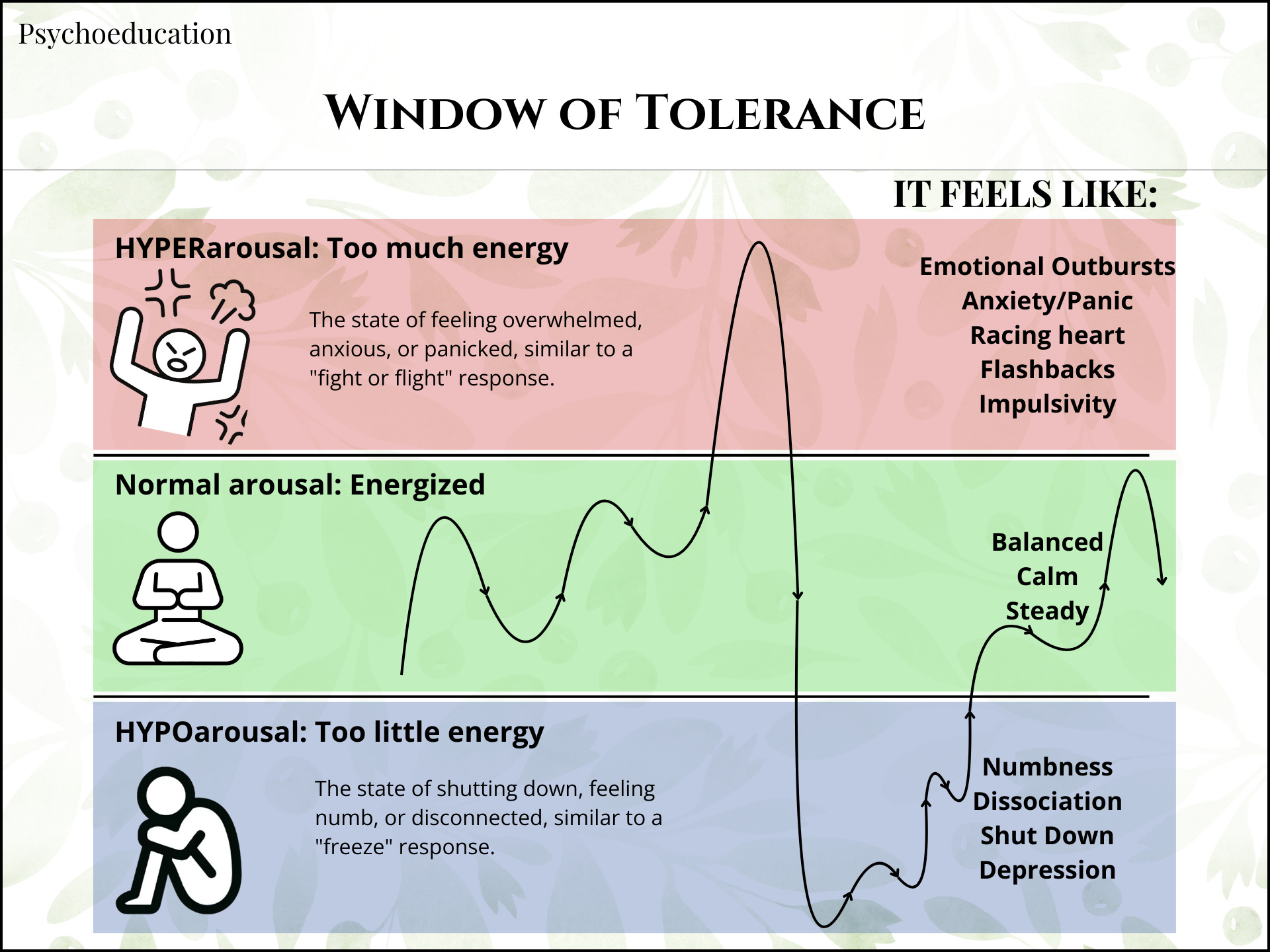
The Window of Tolerance describes the range of nervous system activation where you feel most balanced and able to cope (also called a Comfort Zone). When you’re within this window, your body and mind can respond to stress without becoming overwhelmed or shutting down. You feel present, steady, and better able to regulate your emotions.
When stress increases, your nervous system may move above the window into hyperarousal — a state of too much energy — or below the window into hypoarousal — a state of too little energy. These shifts are automatic and tied to survival responses like fight, flight, or freeze.
What Happens Outside the Window
When you’re in hyperarousal, your system is on high alert. You might experience anxiety, panic, emotional outbursts, racing thoughts, or impulsive reactions.
When you’re in hypoarousal, your system conserves energy. This can feel like numbness, disconnection, shutdown, or depression.
Neither state is a choice; they are automatic protective responses designed to keep you safe.
Why the Window of Tolerance Matters
Your ability to stay within your window directly impacts emotional regulation, relationships, and daily functioning. When you’re outside your window, it’s harder to think clearly, communicate effectively, or respond rather than react. This can show up as snapping at loved ones, feeling overwhelmed by small tasks, or feeling detached from yourself and others.
Gentle Reframing
Several factors influence whether we move outside our window, including current stressors, recovery time, and the balance of adaptive versus maladaptive coping skills. Trauma, chronic stress, burnout, or major life changes can narrow the window, making it easier to become dysregulated. With awareness, compassion, and nervous system support, your window can widen — allowing you to return to balance more easily and feel safer in your body again.
Knowing when we are inside or outside our comfort zone sets the stage for interventions that help our nervous system stay regulated.
How Therapy Helps Widen the Window of Tolerance
Therapy helps widen the Window of Tolerance by supporting your nervous system to feel safer, more regulated, and more resilient over time. Rather than pushing through distress or avoiding it, therapy focuses on building awareness of your body’s signals and learning how to respond with intention.
Through therapeutic support, you can learn tools to gently settle hyperarousal and re-engage from hypoarousal. This may include grounding techniques, emotion regulation skills, and exploring how past experiences have shaped your nervous system’s responses. As these skills strengthen, your system becomes better able to tolerate stress without becoming overwhelmed or shutting down.
Over time, widening your window means spending more moments feeling calm, connected, and present — even when life is challenging. Therapy is not about eliminating stress, but about increasing your capacity to move through it with greater steadiness and self-compassion.
The first step in increasing capacity is awareness—honestly observing your present experience, even when it feels uncomfortable.
One practical way to begin applying these insights is through a reflective practice that helps you notice patterns in your responses.
REFLECTIVE PRACTICE
We can increase our awareness (of our feelings, behaviours, consequences) through a reflective practice. Reflection involves the often uncomfortable task of pausing, looking back on a recent experience and asking ourselves questions design to foster insight (a deeper understanding).
Precipitating Factors
Reflective questions might focus on what factors led up to a particular episode of emotion dysregulation. It could be a bad nights sleep, a skipped meal, or added work duties, possibly all three. Even small, everyday stressors can accumulate, turning normally manageable tasks into overwhelming challenges—especially if we overlook the early warning signs.
Early Warning Signs
Before we become totally dysregulated, our body shows signs of distress. If you were asked to draw your attention to your jaw or shoulders, would you suddenly notice tension? If you were asked to focus on your breathing, would it be short and shallow or deep and rhythmic? Early warning signs appear before full dysregulation. Some people notice growing irritability; others feel the urge to flee or eat. A reflective practice might ask you to identify what your early warning signs are.
Protective Factors
We might also ask ourselves what factors make us more likely to stay in control. Maybe it is the presence of a loved one? Anyone who has ever benefited from having a service animals can understand this one. Having quality sleep and nutrition, being adequately hydrated and feeling connected and supported are all factors that help keep us grounded and in control.
Unmet Needs
This can be a painful point to reflect on but knowing what needs remain unmet guides us in selecting our next steps. Maybe we need skills of emotion regulation or to reach out and gain a sense of connection. Maybe we are feeling pressured and we recognize an unmet need for autonomy.
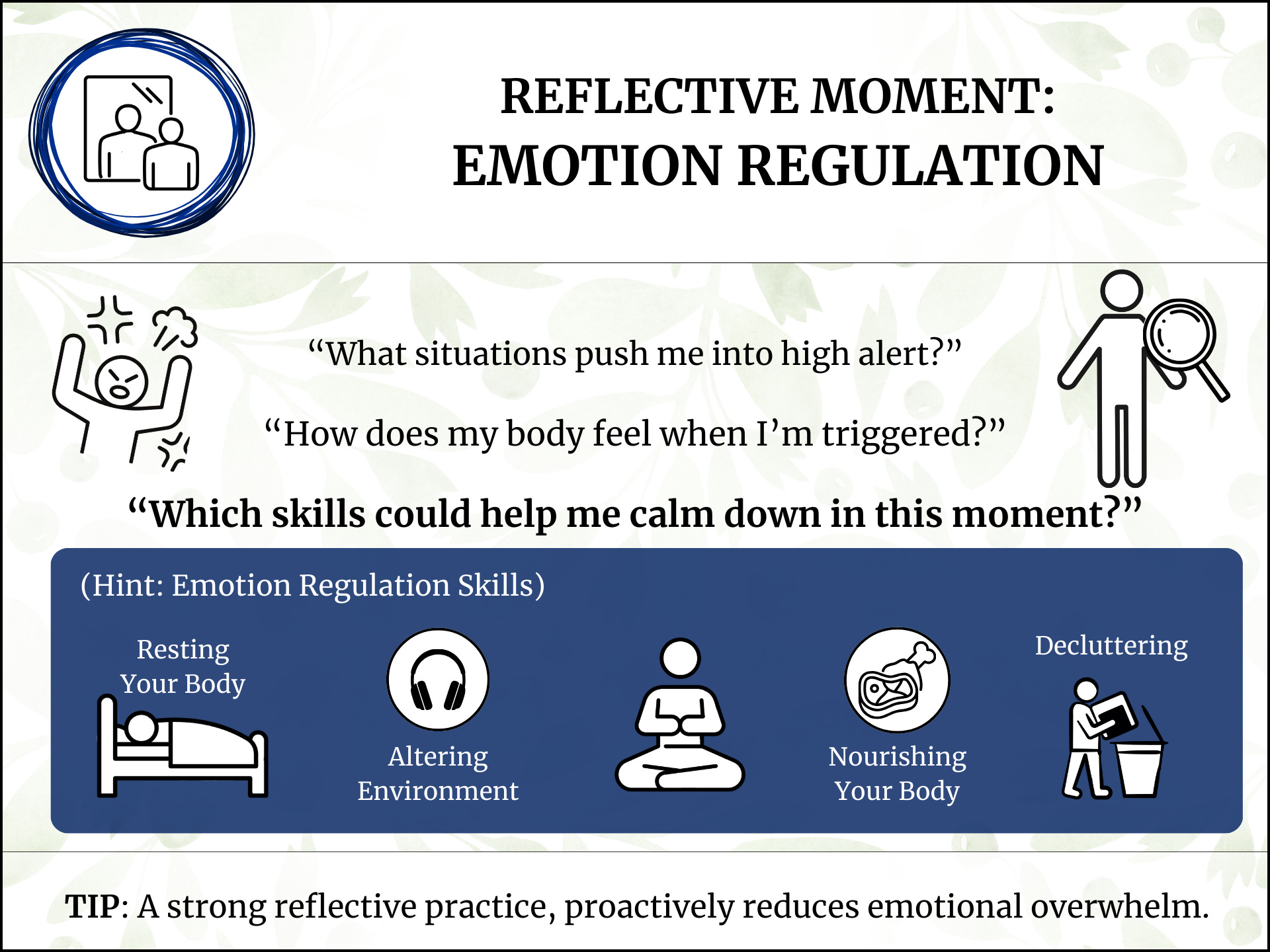
Awareness lays the groundwork for practice—skills we can use in real-time to regulate our nervous system and respond with intention.
PRACTICAL SKILLS FOR
Maintaining Your Window Of Tolerance
The point of a reflective practice is to help us understand what takes us out of our Window of Tolerance. Our practical skills are focused on bringing us back to — and maintaining placement within our comfort zone.
1. Mindful Breathing
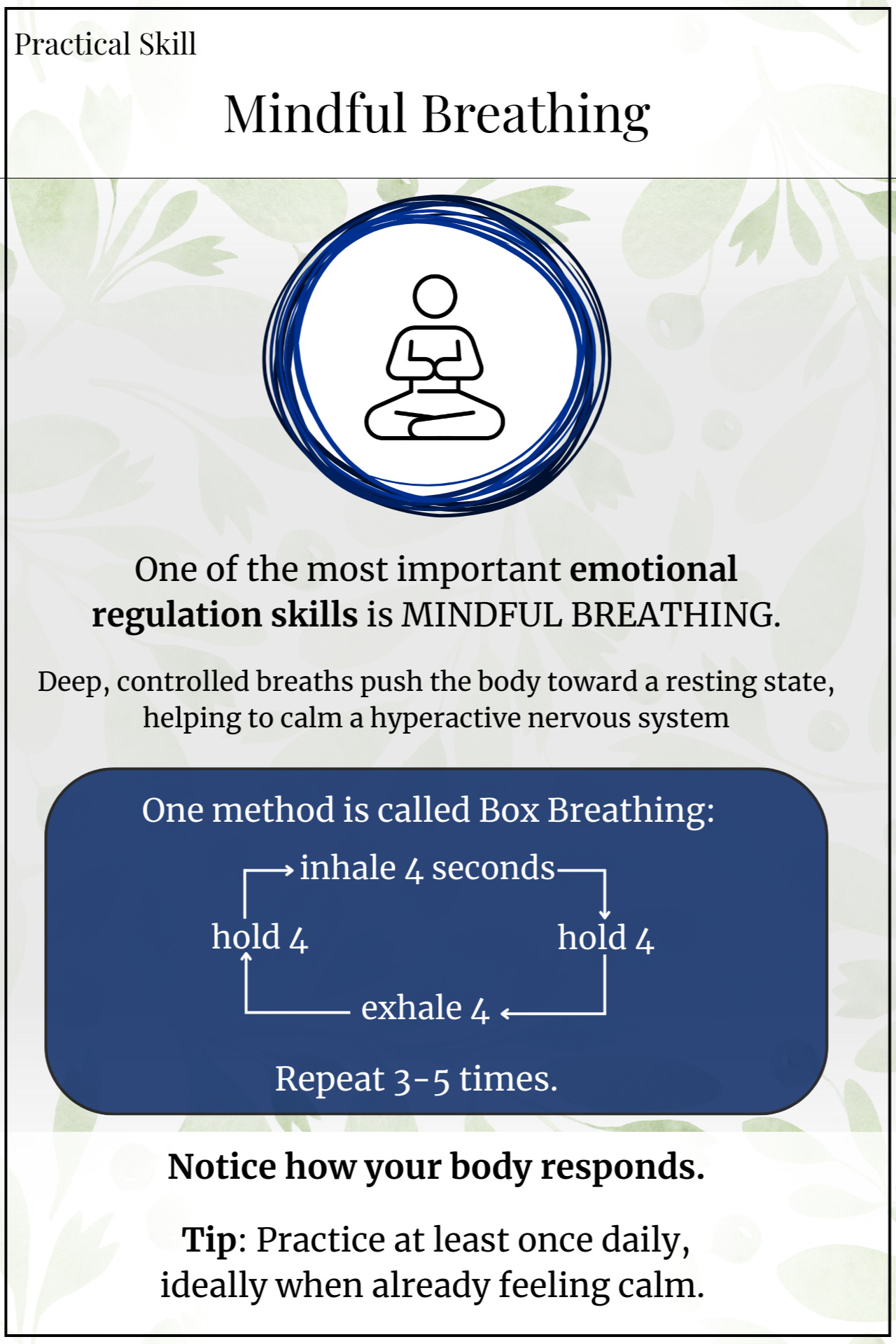
One of the strongest skills we can master is that of mindful breathing. During moments of threat or difficulty, our nervous system steps on the gas, pushing us into overdrive. Deep breathing applies the brakes.
When we take slow, deep breaths, the expanding lungs applies pressure to our parasympathetic nerve (the brakes). Mindful breathing pulls us back towards a “rest-and-digest” response — our calm and relaxed stated.
Multiple breathing patterns exist, from Box Breathing to 4-7-8 to Diaphragmatic. Practice them all and find what suits you best.
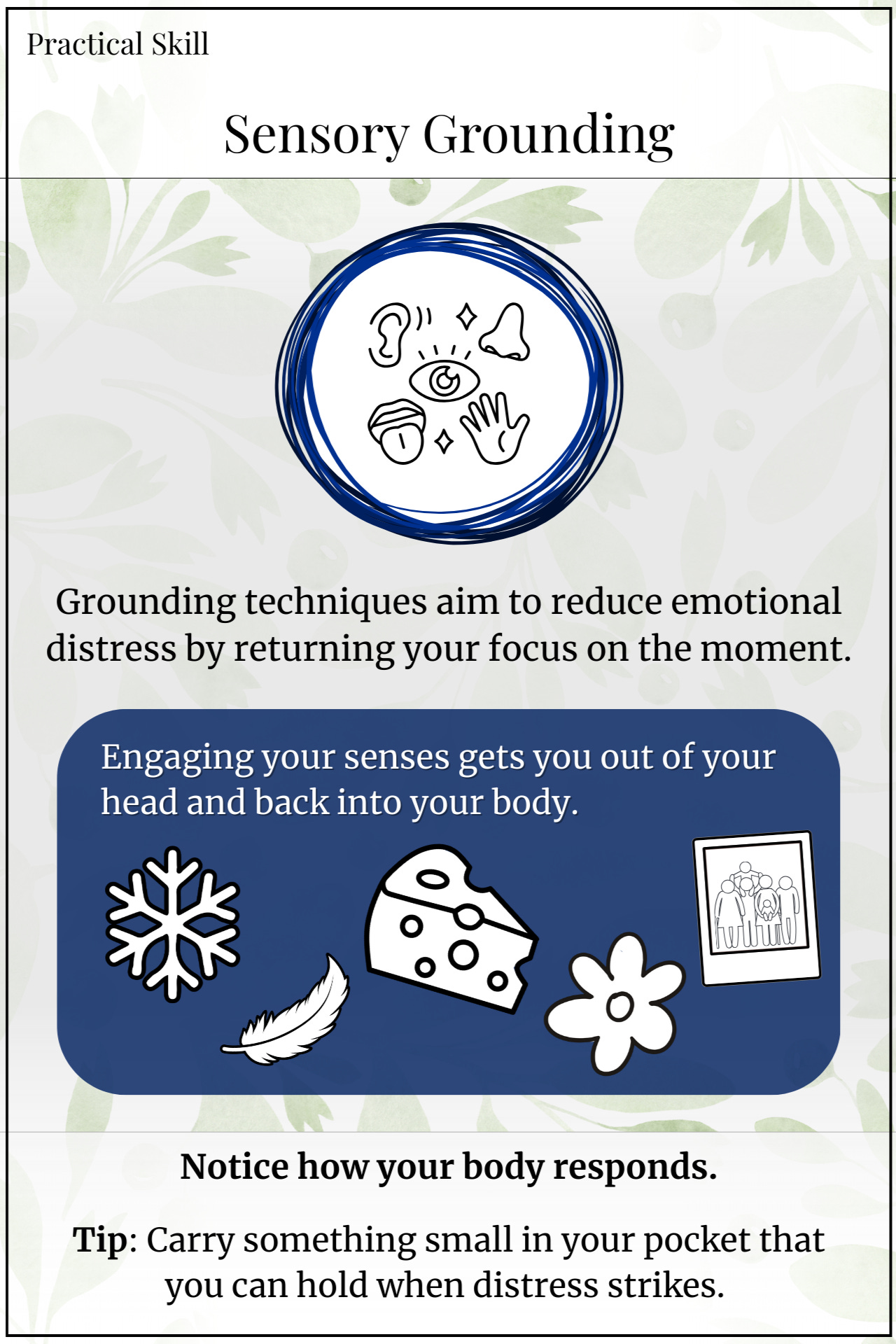
2. Sensory Grounding
There are time when we feel so overwhelmed that we can’t even remember to take a deep breath. In these moments, we can return to the present by engaging our senses.
Once in a triggered state, we can get stuck in our heads or focused on our feelings and unintentionally make a bad situation worse.
Engaging the senses helps get us out of our head (and out of our feels) and back into our bodies and the present moment.
Whether you pick up something cold or literally stop to smell a flower, there is almost always something in our vicinity that we can use. Sometimes people might want to be more subtle so they might carry a smooth stone to hold or a picture of their loved ones to look during a moment of distress.
3. Cultivating Awareness
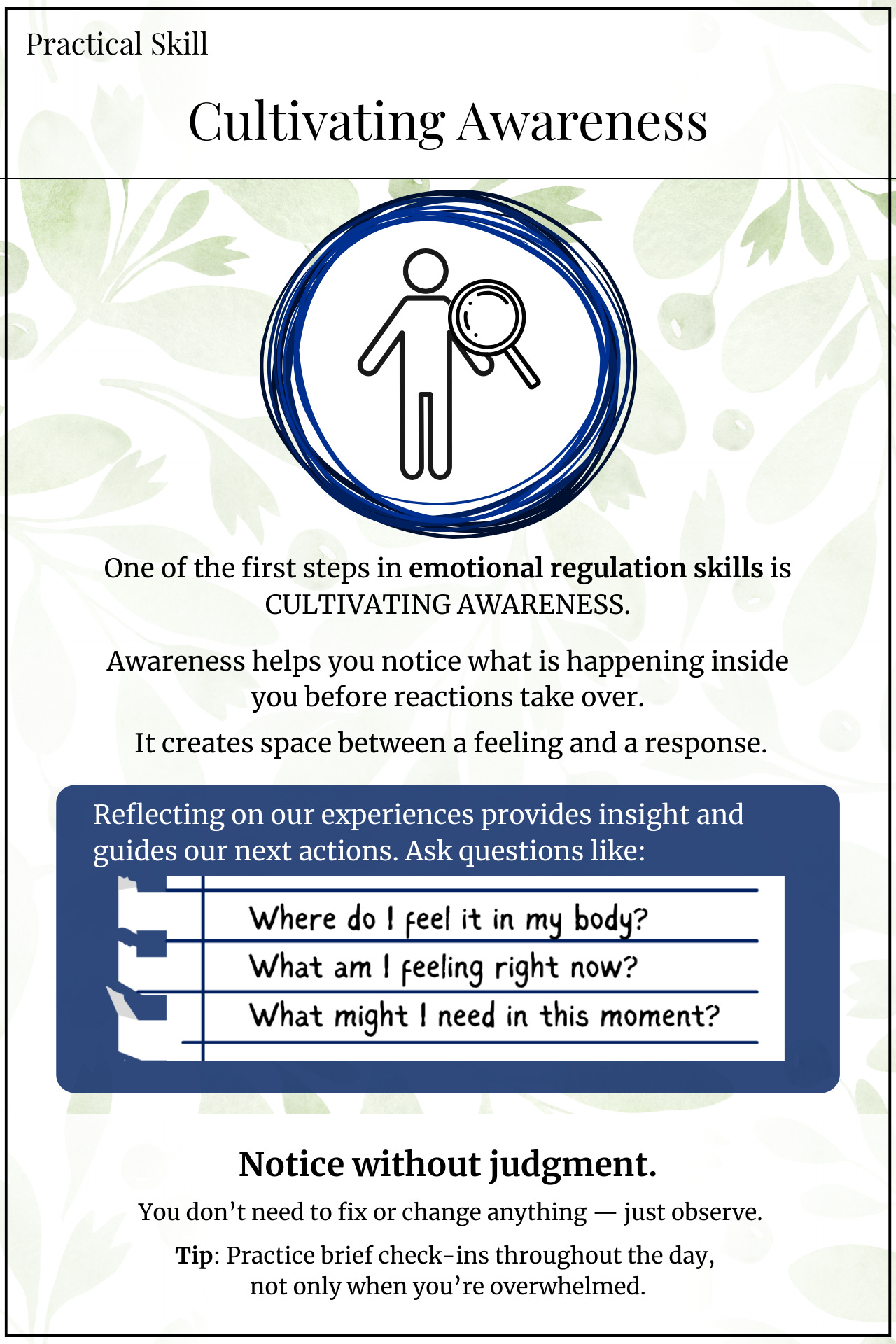
Similar to a reflective practice, cultivating awareness involves ongoing objective observation about what we are truly experiencing to gain a deeper understanding of our needs allowing for more intentional behaviour selection.
The hardest part is maintaining awareness while outside our Window of Tolerance. If we can learn to take a pause, we can change how we interact with the word around us. Instead of reacting using old, out-dated patterns, we can start to respond with intention and purpose.
Pausing a few times a day to scan your body, notice your thoughts, and name your emotions can help reset your nervous system.
4. Environmental Adjustments
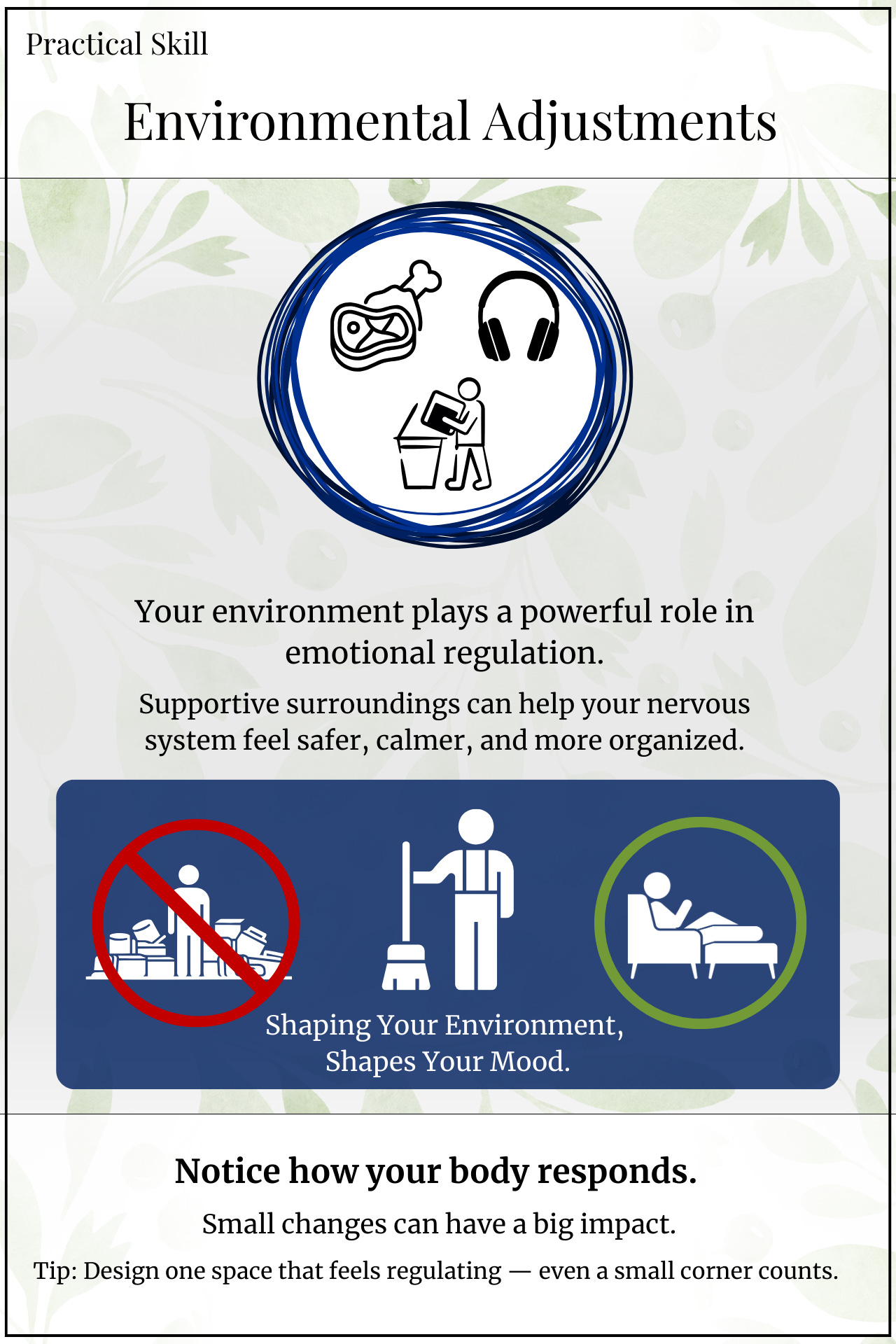
Few people feel more comfortable in a cluttered, messy room than in one that is open, clean, and tidy. Our mental state is affected by the environment around us. Too much clutter, too much light, too much noise and it translates into too much stimulation — pushing us beyond our threshold.
Crumbs on the floor. An itchy tag on a shirt. A coworker that talks a little too loud. All of these add to our mental load.
The good news is that equally small changes to our environment can help alleviate some of that load. Clearing clutter, dimming the lights, reducing the noise all help keep you in your comfort zone.
Creating a calm environment supports your nervous system and encourages emotional regulation.
PARENTS’ CORNER
Role Modeling Calm
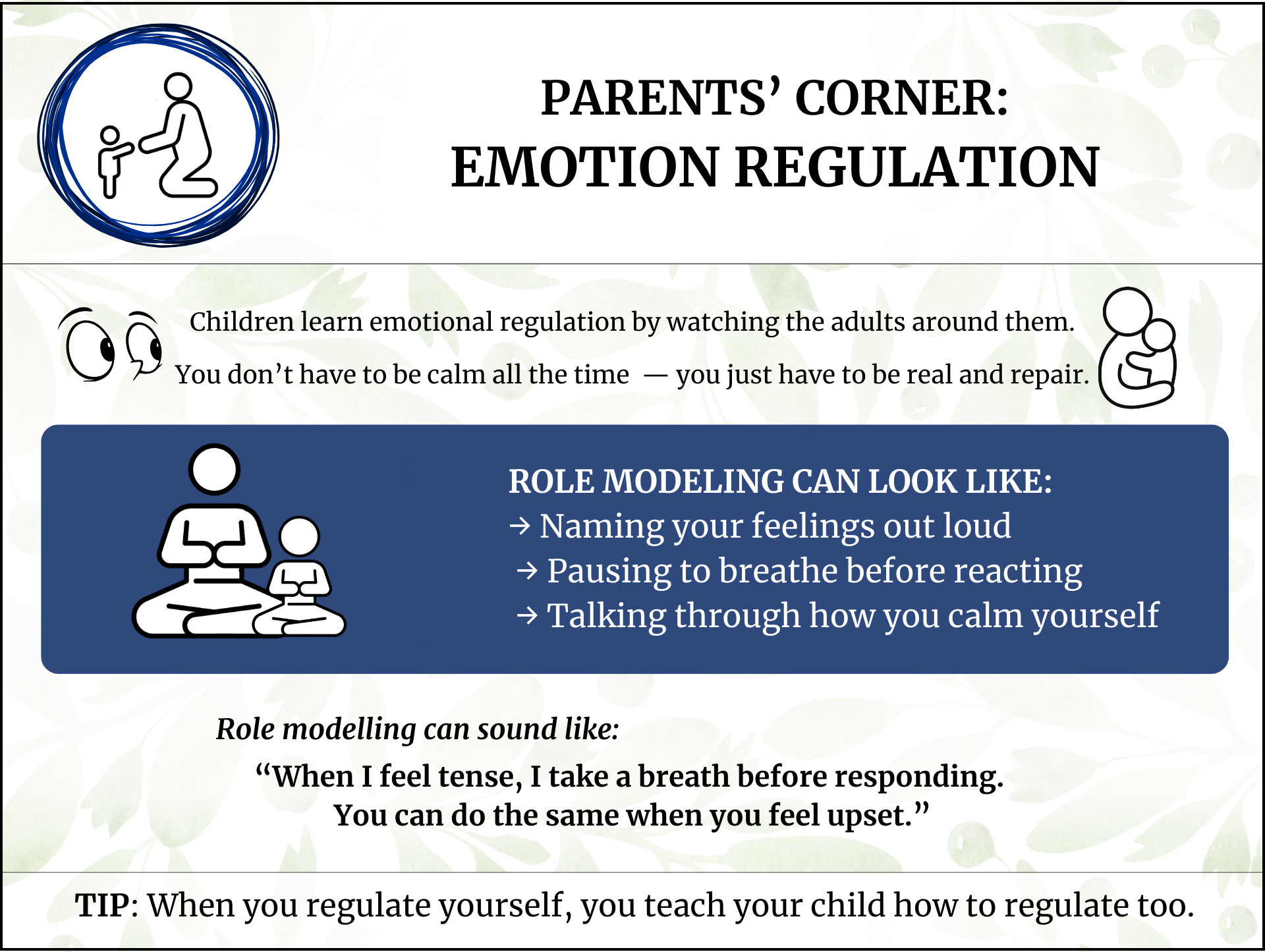
Most have heard the expression: Monkey see, Monkey do. Children are the monkeys. Children learn by watching. No matter how many times you say “do as I say, not as I do”, they are biologically hardwired to copy your actions.
When you regulate your nervous system, when you model calm, grounded behavior, you show them the path to regulation.
Our self-soothing habits, supportive self-talk, self-compassion and self-care are all behaviours they need to see you engage in. Sometimes we show them through our actions; other times we verbalize our experience.
For example:
“When I feel tense, I take a breath before responding. You can do the same when you feel upset.”
By demonstrating regulation, you give children a powerful tool for managing their own emotions.
NEXT STEPS
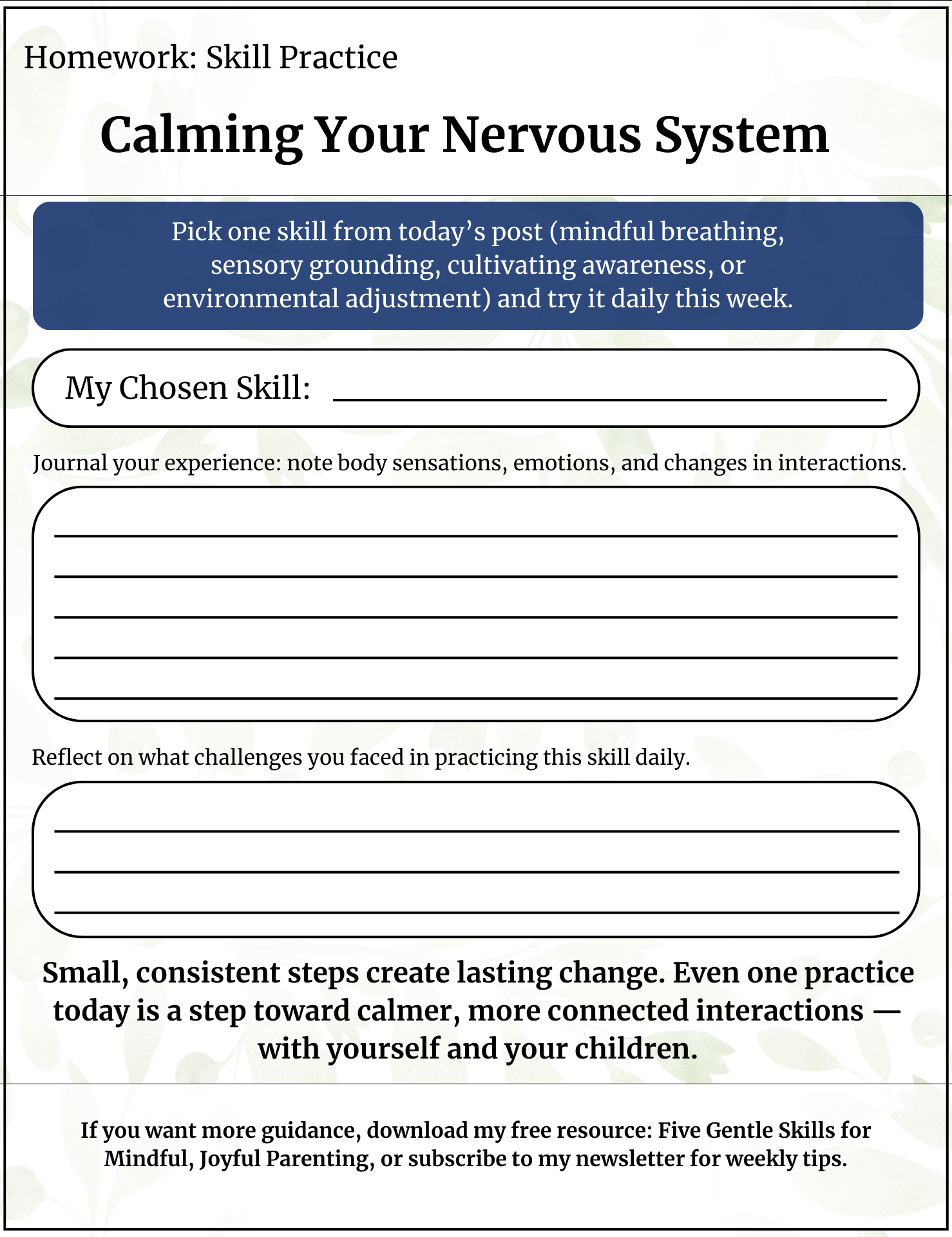
The best way to hone a new skill is to practice. Spend some time reflecting on which of the skills above could have the biggest impact in your life. Which one seems most accessible? If you are looking to move from chaos to calm, regular structured practice can help you get there. Use the worksheet below to objectively observe how you respond to the different skills described above.
Instructions
Pick one skill from today’s post and try it daily this week.
Journal your experience: note body sensations, emotions, and changes in interactions.
If you want more guidance, download my free resource: Five Gentle Skills for Mindful, Joyful Parenting, or subscribe to my newsletter for weekly tips.
This content is for educational purposes only and is not a substitute for personalized medical or mental health advice.
I’d love to hear from you! Which of these skills do you think will make the biggest difference in your daily life? Or, have you noticed your own early warning signs when stress builds? Share one thought or experience below—I read and respond to every comment!